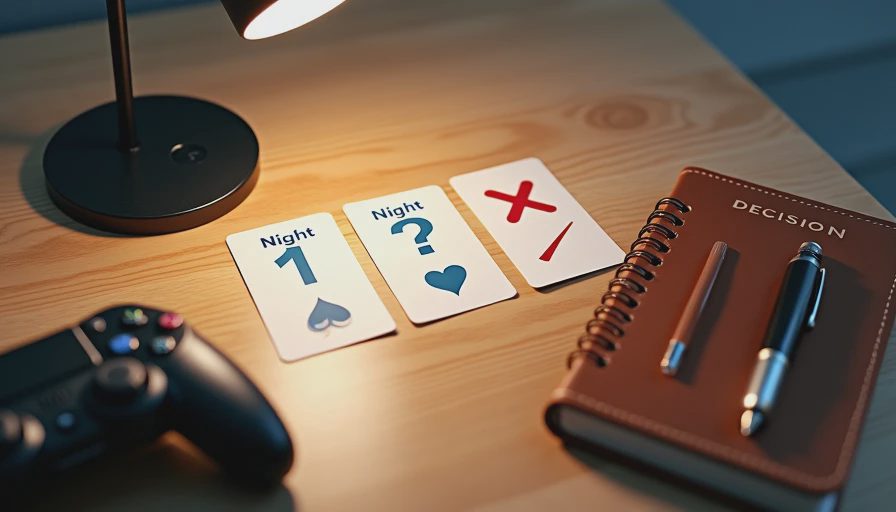
The Second Night Test
I have a rule about first nights.
I don't judge a game by its first session.
The first night is full of noise. You're learning controls. You're getting your bearings. You're adjusting to the art style, the pacing, the vibe. Sometimes you're tired. Sometimes you're distracted. Sometimes you're just not in the right headspace.
The first night is a date. The second night is where you figure out if there's something there.
I've played games that had a mediocre first night and an excellent second. I've also played games that had a great first night and a terrible second. The first night is a signal, not a verdict.
That's why I have a system. A way to decide whether a game deserves a second night—and what to look for when I give it one.
The First Night: Signals, Not Verdicts
Before I talk about the second night, let me be clear about what I'm looking for on the first.
The first night is about signals.
Did the game respect my time? If the first session was full of unskippable cutscenes, long tutorials, or tedious setup, that's a signal.
Did I feel any engagement? Even if I wasn't fully hooked, did something grab me? A character? A mechanic? A mystery?
Am I curious? Do I want to know what happens next? Even a little?
These are signals. They're not verdicts. A game can have a slow first night and still be great. A game can have an engaging first night and still fall apart.
The second night is where you find out.
The Second Night: What I'm Looking For
When I sit down for the second session, I'm looking for specific things.
Momentum. Does the game have a sense of forward movement? Am I making progress? Or does it feel like I'm treading water?
Clarity. Do I understand what I'm supposed to be doing? Do I know the core loop? Or am I still confused about the basic mechanics?
Engagement. Am I looking forward to playing? Or am I checking the clock?
Honesty. Is the game being honest about what it is? Or is it hiding its true nature behind a slow opening?
These are the questions I ask myself during the second session.
The Three Second-Night Scenarios
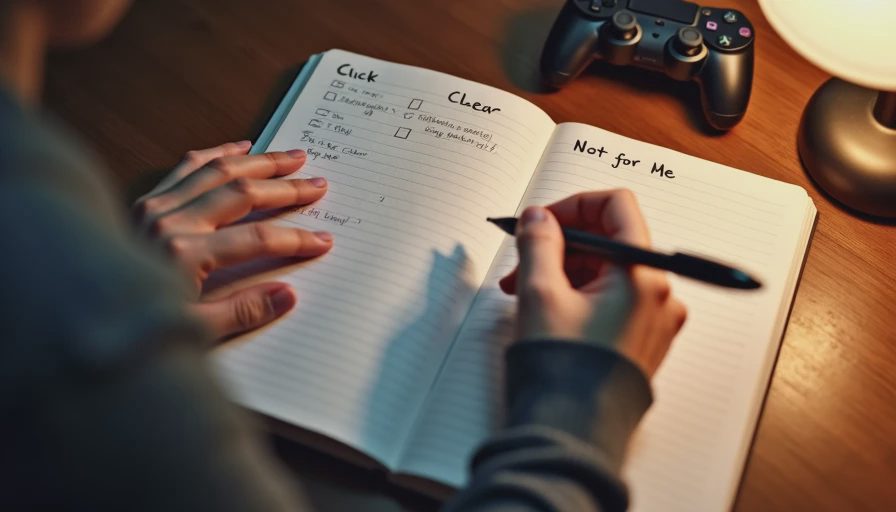
Based on my experience, there are three possible outcomes for the second night.
Scenario One: The Game Clicks.
Everything makes sense. The mechanics feel natural. The pacing is right. I'm engaged. I'm curious. I want to keep playing.
This is the best outcome. The game earned its second night, and it's going to earn many more.
Scenario Two: The Game Is Still Unclear.
I understand the basics, but something isn't clicking. The mechanics feel awkward. The pacing is off. I'm not engaged, but I'm not sure why.
This is the tricky scenario. Sometimes a game needs a third session to click. Sometimes it never does.
My rule: if I'm still unclear after the second night, I give it one more. The third night is the decider.
Scenario Three: The Game Confirms It's Not for Me.
Everything is clear. I understand the game. I just don't like it.
The mechanics are fine, but they're not satisfying. The story is fine, but I don't care. The world is fine, but I don't want to spend time there.
This is the easiest scenario. I'm done. No guilt. No obligation. Just a clear decision.
The Third Night Rule
If a game doesn't click by the second night, I give it one more chance.
The third night is the decider.
By the third session, you should know. If it still feels like work, if you're still forcing yourself to play, if you're still waiting for the good part—it's not going to get better.
Three nights is enough. That's about six hours of gaming time. For a busy adult with limited time, six hours is a significant investment. If a game hasn't shown you something worthwhile by then, it's not going to.
What I Look for After the Third Night
By the end of the third session, I'm looking for signs of a long-term relationship.
Am I excited to come back? If yes, I'm committed. If no, I'm done.
Do I care about the story or characters? If yes, I'm invested. If no, I'm indifferent.
Is the core loop satisfying? If yes, I'll keep playing. If no, I'll get bored.
Do I feel like my time was well spent? This is the most important question. If I'm finishing sessions feeling satisfied, the game is working. If I'm finishing sessions feeling drained or indifferent, it's not.
A Real Example
Let me walk you through a recent experience.
I started a new indie game on a Tuesday night. The first session was fine. Not great. Not terrible. Just... fine.
I wasn't hooked, but I wasn't bored either. I decided to give it a second night.
On Wednesday, I played again. The game started to click. The mechanics made sense. The pacing felt right. I was engaged. I was curious. I wanted to keep playing.
By the end of the third session, I was fully committed. The game had earned my trust. I finished it over the next week and loved every minute.
That's how it should work. One night to get your bearings. One night to figure out if there's something there. One night to decide.
The Alternative: When It Doesn't Work
I've also had experiences where the second night didn't lead anywhere.
I played a game that looked promising. The art was beautiful. The premise was intriguing. The first night was okay.
The second night was more of the same. Fine. Competent. But nothing was clicking. I wasn't engaged. I wasn't curious. I was just going through the motions.
I gave it a third night. It didn't improve. I moved on.
No guilt. No obligation. Just a practical decision. The game wasn't for me. That's okay.
Why This System Works
This system works because it's structured but flexible.
It gives a game a fair chance—three sessions, about six hours total. That's enough time to get past the learning curve and see if there's something there.
But it also sets a limit. You're not committing to a 60-hour epic on faith. You're investing a reasonable amount of time, evaluating, and then making a decision.
For busy adults, this is essential. We don't have the luxury of endless patience. We need systems that help us make good decisions with limited information.
The Bottom Line
The first night is a date. The second night is where you figure out if there's chemistry.
If a game doesn't click by the second night, give it one more chance. The third night is the decider.
By the end of the third session, you should know. If it's not working, move on. No guilt. No obligation. Just a clear decision.
A good game should earn your next hour. It should earn your second night. And by the third night, it should have earned your commitment.
If it hasn't, it's not the right game for you.
Worth your night, or not?




No notes yet — write the first.