The Question That Changed Everything
I used to start games without thinking.
I'd see a trailer, read a review, hear a recommendation, and just... start. No questions. No evaluation. No hesitation.
And I'd often regret it.
I'd play for a few hours, realize the game wasn't for me, and feel like I'd wasted my time. I'd force myself to keep going out of obligation, and waste even more time. I'd finish a game I didn't enjoy and wonder why I bothered.
Then I started asking one question before every new game.
One question that changed everything.
It's simple. It's honest. And it's saved me from countless wasted evenings.
Here it is.
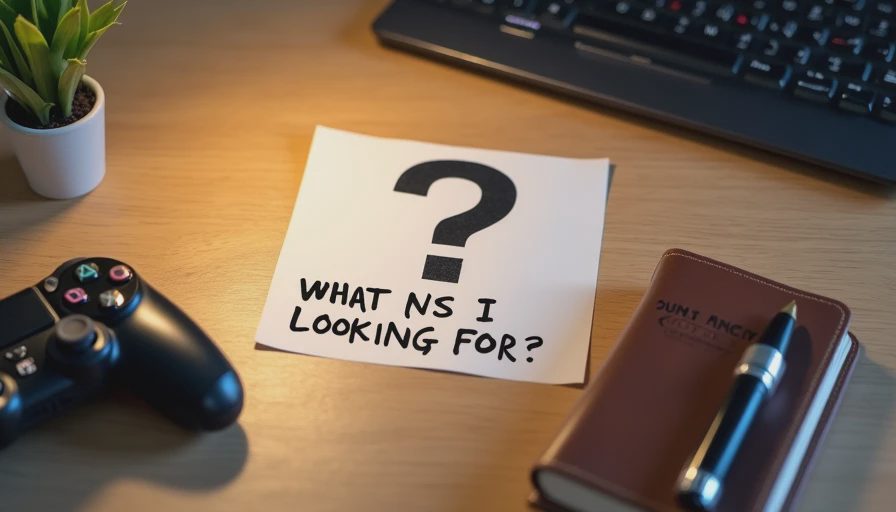
"What am I actually looking for right now?"
That's the question. That's the whole thing.
It sounds obvious. It sounds too simple. But it's the most useful question I ask before starting any new game.
Why the Question Matters
Here's why this question is so powerful.
Most of us don't know what we want. We think we do. But we don't. We start a game because it looks interesting, or because someone recommended it, or because it's on sale. We don't stop to ask why.
We don't stop to ask what we actually need.
The question forces you to be honest. It forces you to think about your current state. Your mood. Your energy. Your schedule.
What are you actually looking for right now? Relaxation? Challenge? Story? Escapism? Something to think about? Something to zone out to?
The answer changes everything.
How I Use the Question
Here's how I use the question in practice.
Step 1: Pause before starting.
I don't just launch a game. I stop. I take a moment. I ask the question.
Step 2: Be honest about my current state.
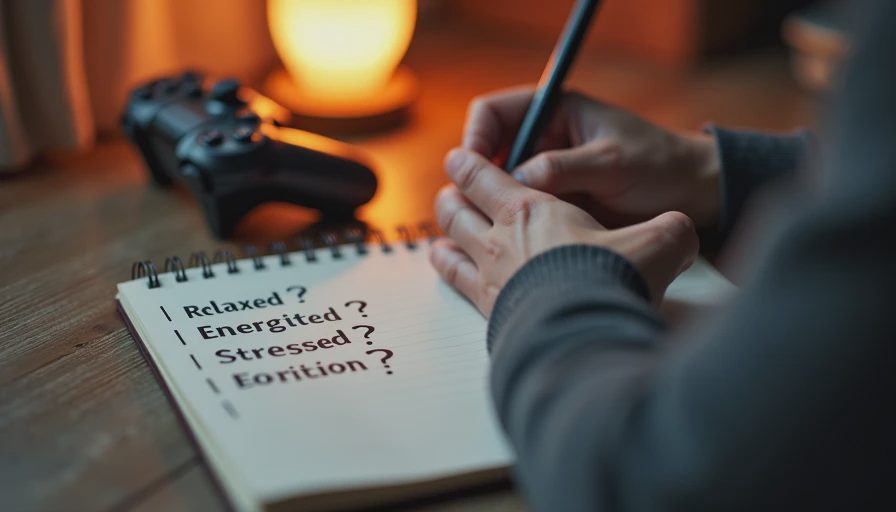
Am I tired? Energized? Stressed? Bored? Happy? Sad? My answer will vary depending on how I'm feeling.
Step 3: Think about what I need.
What would actually help me right now? Something relaxing? Something engaging? Something distracting? Something meaningful?
Step 4: Choose accordingly.
If I'm tired, I choose a game that's gentle and low-effort. If I'm energized, I choose something challenging and deep. If I'm stressed, I choose something relaxing. If I'm bored, I choose something engaging.
The question guides the choice.
A Real Example
Let me walk you through a recent example.
Last week, I had a long day at work. I was exhausted. My brain was fried. I sat down to play something.
My first instinct was to play a complex strategy game I'd been meaning to start. I'd heard great things about it. I was excited to try it.
But I paused. I asked myself: What am I actually looking for right now?
I was tired. I was drained. I didn't want to think. I didn't want to learn new systems. I didn't want to make complex decisions.
I wanted something relaxing. Something low-effort. Something that would help me unwind.
So I didn't start the strategy game. I played a relaxing game instead. Something simple. Something familiar. Something that didn't demand too much.
I finished the session feeling restored, not exhausted.
The question saved me from a bad choice.
Another Example
Here's another example from a different day.
Last weekend, I had a free afternoon. I was energized. I was focused. I was ready for something challenging.
My first instinct was to play something familiar. Something easy. Something I knew I'd enjoy.
But I paused. I asked myself: What am I actually looking for right now?
I was energized. I was focused. I wanted something that would challenge me. Something that would make me think.
So I didn't play something familiar. I started a new game. A challenging one. A deep one. Something that would engage my brain.
I finished the session feeling satisfied, not bored.
The question guided me to the right choice.
The Different Answers
The question can lead to many different answers.
"I'm looking for relaxation." Something gentle. Something low-effort. Something that doesn't demand much.
"I'm looking for challenge." Something difficult. Something that makes you think. Something that tests your skills.
"I'm looking for story." Something narrative-driven. Something with characters and plot. Something that moves you.
"I'm looking for escapism." Something immersive. Something that transports you somewhere else. Something that lets you forget about the world.
"I'm looking for comfort." Something familiar. Something you've played before. Something that feels like home.
"I'm looking for discovery." Something new. Something different. Something that surprises you.
"I'm looking for a quick hit." Something short. Something with immediate satisfaction. Something you can pick up and put down.
Each answer leads to a different kind of game. And the answer changes from day to day.
Why This Works
This question works for a few reasons.
It's honest. You can't lie to yourself. You know what you actually need. The question just forces you to acknowledge it.
It's specific. It's not "what game should I play?" It's "what am I looking for?" That's a different question. And the answer is more useful.
It's practical. It leads to a choice. You know what you need, so you can pick a game that provides it.
It saves time. You don't waste time on the wrong game. You choose something that fits your current state.
It improves the experience. When you play the right game for your current state, you enjoy it more. You're more present. You're more satisfied.
The Opposite Approach
The opposite approach is reactive.
You see a game, you get excited, you start it, you hope it works out. There's no thought. No evaluation. No honesty.
This approach often leads to disappointment.
You start a complex strategy game when you're tired. You start a relaxing game when you're bored. You start a narrative game when you want action.
The game isn't the problem. The mismatch is the problem.
The question prevents the mismatch.
What I've Learned
I've learned a few things from asking this question.
I need different things on different days. What I need on a Tuesday night isn't what I need on a Saturday afternoon. The question helps me recognize that.
I'm not always honest with myself. Sometimes I want to play something challenging when I'm tired, because I feel like I should. The question forces me to be honest.
The right choice feels better. When I choose a game that fits my state, I enjoy it more. I finish sessions feeling satisfied.
The wrong choice feels worse. When I choose a game that doesn't fit, I feel frustrated. I feel like I wasted time.
The question saves me from myself. I don't make impulsive choices. I don't start games I shouldn't start.
The Bottom Line
One question changed everything.
"What am I actually looking for right now?"
It's simple. It's honest. It's effective.
Before you start your next game, ask yourself this question. Be honest about your state. Think about what you need. Choose accordingly.
You'll waste less time. You'll enjoy more games. You'll finish sessions feeling satisfied instead of frustrated.
A good game should earn your next hour. But first, you have to ask the right question.
Worth your night, or not?




No notes yet — write the first.