The best overlooked indie games do not ask you to endure six slow hours before revealing why they matter. They make a clear promise early, respect your attention, and give you a reason to return after work, dinner, and the bedtime routine. That matters when your available gaming time is a Tuesday night from 9:15 to 10:30.
I have nothing against enormous role-playing games or sprawling open worlds. I still enjoy them. But an adult backlog needs better sorting than “this received good reviews.” Interesting is not the same as worth your night. These are overlooked indie games that offer a strong first session, satisfying progress, or an emotional payoff that does not require treating gaming like a second job.
What makes a game worth one evening?
My first test is time-to-fun. A game does not need to explain every system in ten minutes, but it should give me something meaningful to do. The Case of the Golden Idol presents a strange murder scene and immediately asks me to investigate it. TOEM gives you a camera, a small world, and charming problems that can be solved without a combat tutorial. These games tell you what they are early, and that is a compliment.
The second test is friction. Menus, crafting trees, map clutter, and repeated travel can consume more energy than the actual play. Good overlooked indie games use limits intelligently. A short chapter, compact map, or clear objective can feel more generous than a huge world filled with errands. I want decisions to occupy my attention, not busywork to occupy my hands.
The final test is return value. If I stop after 45 minutes, can I remember what I was doing? If I return a week later, can I understand the goal without watching a recap video? That kind of design is especially valuable for parents and full-time workers.

Short games with a complete arc
A Short Hike is an obvious recommendation in some circles, but it remains useful as a standard for compact design. Its gentle exploration, optional conversations, and modest objective create a complete experience in an afternoon. It never pretends that a larger map automatically creates a better adventure.
Venba takes a different route. It is a cooking narrative game about family, memory, and adapting traditional recipes in a new country. The cooking interactions are simple, but they support the story instead of distracting from it. You can finish it in a few focused sessions, and the themes linger longer than many 40-hour campaigns.
If you want something more mechanically demanding, try Minit. Its world resets every 60 seconds, turning exploration into a series of small experiments. The time limit sounds stressful, but the permanent discoveries make each attempt useful. It is one of those overlooked indie games that turns a restriction into the central pleasure.
Smart systems without a homework assignment
The overlooked indie games I recommend most often usually have one strong idea rather than twelve average ones. Into the Breach is built around predicting enemy attacks and making the least disastrous move. Because the battles are turn-based and compact, you can play one mission before bed without losing the thread. A failed turn teaches you something instead of simply wasting your evening.
Mini Metro offers a similar clarity. You connect stations, manage limited resources, and watch a clean transit diagram become increasingly difficult to control. A round can last ten minutes or much longer, so it fits naturally around interruptions. It is relaxing until it is not, which makes it excellent for players who enjoy strategy but do not want to memorize a massive rulebook.
Dorfromantik is quieter still. Its tile placement loop creates a landscape one piece at a time, with optional goals that add direction without demanding optimization. This is a good choice when you want to play while listening to a podcast. The game supplies structure, but it does not punish you for having a tired brain.
Narrative games that do not waste the setup
Citizen Sleeper is more substantial, but its calendar-based structure makes progress easy to measure. You make decisions, manage limited dice, and build relationships on a space station. It has plenty to say about labor, identity, and survival, yet the writing is delivered through clear daily choices rather than endless wandering. One or two sessions can produce a meaningful turn in the story.
The Forgotten City is a strong pick for players who want mystery without committing to a giant open world. Its time loop gives exploration a practical purpose: learn something, test a theory, and use that knowledge to change the next cycle. The premise is easy to understand, while the investigation becomes richer as you connect characters and consequences.
For a more intimate experience, try Signs of the Sojourner. Its conversation system uses cards, so communication becomes a matter of matching patterns and adapting to other people. The mechanic is unusual, but not merely weird for its own sake. It makes social comfort, misunderstanding, and compromise feel tangible.
A practical way to choose tonight’s game
Start with the amount of time you actually have, not the time you wish you had. For 30 to 45 minutes, choose Mini Metro, Minit, or Dorfromantik. For a two-hour block, TOEM, Venba, or A Short Hike can provide a satisfying arc. If you have several evenings available, Citizen Sleeper or The Forgotten City offers deeper investment without requiring an enormous map.
Next, match the mood. Choose Into the Breach when you want decisions. Choose Venba when you want a focused story. Choose Dorfromantik when your brain needs a low-pressure activity. This small step prevents a common backlog mistake: selecting a demanding game when you are already too tired to enjoy it.
Finally, use a 60-minute trial. Do not ask whether the game is objectively brilliant. Ask whether it earned the next hour. If you are curious about the systems, thinking about the characters, or eager to solve the next problem, continue. If you are checking your phone and waiting for the game to improve, stop without guilt.
Building a backlog that respects your schedule
A useful backlog is not a museum of every acclaimed release. It is a short list of games that fit your current life. Keep three categories: one quiet game, one demanding game, and one narrative game. That gives you options for different kinds of evenings without creating another project to manage.
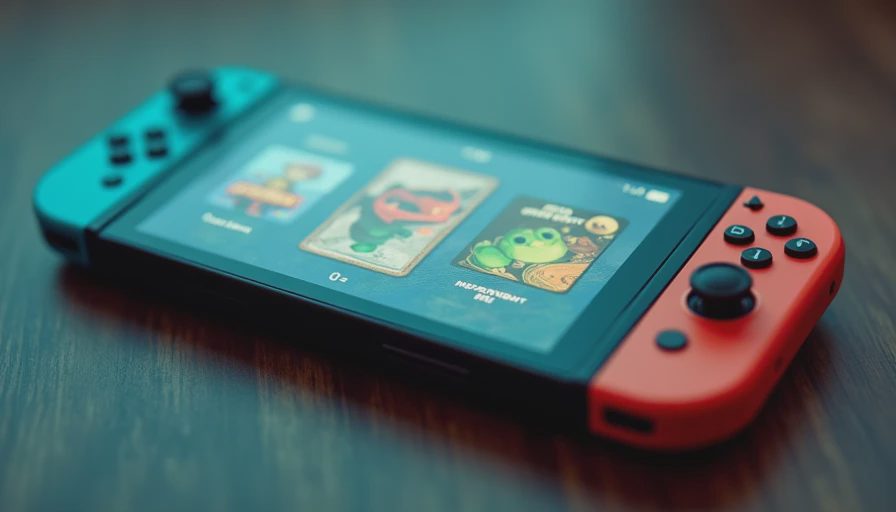
Save games with reliable checkpoints for weekdays. Use longer, more immersive titles on weekends when interruptions are less likely. On Steam, Switch, PlayStation, or Xbox, wishlists and download queues can help, but the human filter matters more than any recommendation algorithm. Read the basic loop, check the estimated length, and watch enough gameplay to understand the pace.
The best overlooked indie games are not necessarily obscure forever, and they do not need to be perfect for every player. They need to make a fair exchange: your limited attention for discovery, emotion, challenge, or calm. A good game should earn your next hour. When it does, even a short session can feel like time well spent.




No notes yet — write the first.